


Jessica Svartvit Barcelona - Spain Hamburg - Germany @jessicasvartvit termin@jessicasvartvit.com

With twelve years of professional experience, Jessica Svartvit has consolidated a unique artistic language where technical precision and philosophy merge on the skin. Her style, which masterfully navigates between the delicacy of fine-line botanicals, subtle ornamentals, and the strength of rigid geometry or chrome-style tattoos, is the reflection of a constant search for balance. For Jessica, tattooing goes far beyond ink: it is a bridge to human connection, a catalyst for confidence, and a way to immortalize stories and memories.
In this intimate interview, the artist opens the doors to her evolution, from her roots in hardcore punk and the funny anecdote of her chaotic first tattoo, to her current maturity, where she combines large-scale projects on the skin with her recent and vibrant exploration into retro-futuristic acrylic painting. A profound conversation about embracing paradoxes, escaping the creative routine, and finding harmony within contrast.

1. What memories do you have of your first encounters with art, and at what point did you realize your destiny was to permanently modify the skin?
I remember sitting in the most boring lectures during university and realizing what drawing details did to me. How you can create something calm and unified out of chaotic lines and shapes. I’ve always loved paradoxes. The idea of combining that with human elements forever — emotions, pain, stories, growth — fascinated me endlessly and, honestly, scared me at the same time.


2. Do you remember the very first tattoo you ever did? What were you feeling at that moment, and what do you think today when you look back at that piece?
A long time ago, I played in a punk hardcore band. We were really close friends — reckless and addicted to risk. So naturally, I did my very first tattoo on our singer’s leg. It was a femur bone on his calf in a dotwork style. During the tattoo, I literally forgot to breathe and passed out. Looking back after 13 years, I’d say usually it’s the clients who pass out. The anatomy of that tattoo was completely wrong, but paradoxically, I was having the time of my life.
3. Many people wonder: did you consider yourself an artist before becoming a tattooist, or did art appear in your life through the tattoo machine?
That really developed through tattooing itself, and especially through the curiosity that came with it — wanting to try every style and every subject possible. Luckily, I got the chance very early on to put my own creative madness onto skin, and I quickly learned how to combine art and craftsmanship.
4. How was the process of finding that balance between rigid geometry and natural forms? Furthermore, how was the transition to the style you practice today? Did you experiment with other styles before deciding that dotwork and geometry were your definitive language?
I tried everything. I love traditional tattoos because they combine everything that makes me happy. Wildly mixing things together, drawing endlessly — mostly at night — and tattooing a lot (probably way too much and in a pretty unbalanced way for a beginner) eventually brought me to my style. Even today, I still love every challenge, constantly try new things, and I still sweat every time I do a fine-line wrist lettering piece — which I genuinely still love doing for my regular clients
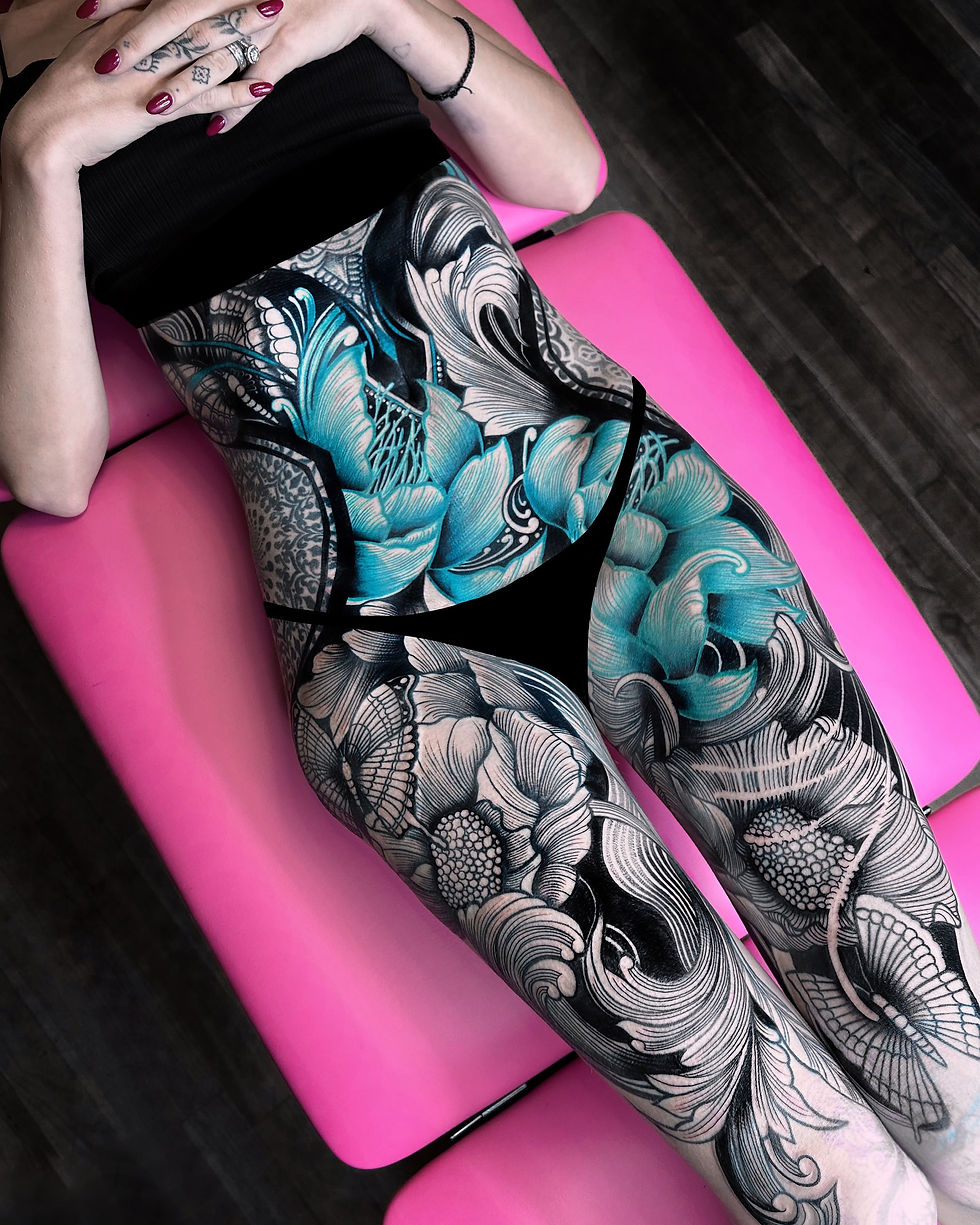


5. For how many years has tattooing been your way of life, and how do you feel your steady hand and artistic vision have evolved from year one to today?
I’ve been tattooing professionally for 12 years now. Naturally, your focus changes over time. At first, you put all your energy into technique: solid color packing, clean lines, and precision. Then, I focused on creating non-repeatable designs and body flow. Then, on building deeper connections with my clients. And now, I feel like I’ve reached an amazing stage where I’m trying to combine all of that in larger projects — while making sure every single client and I have a great time along the way.
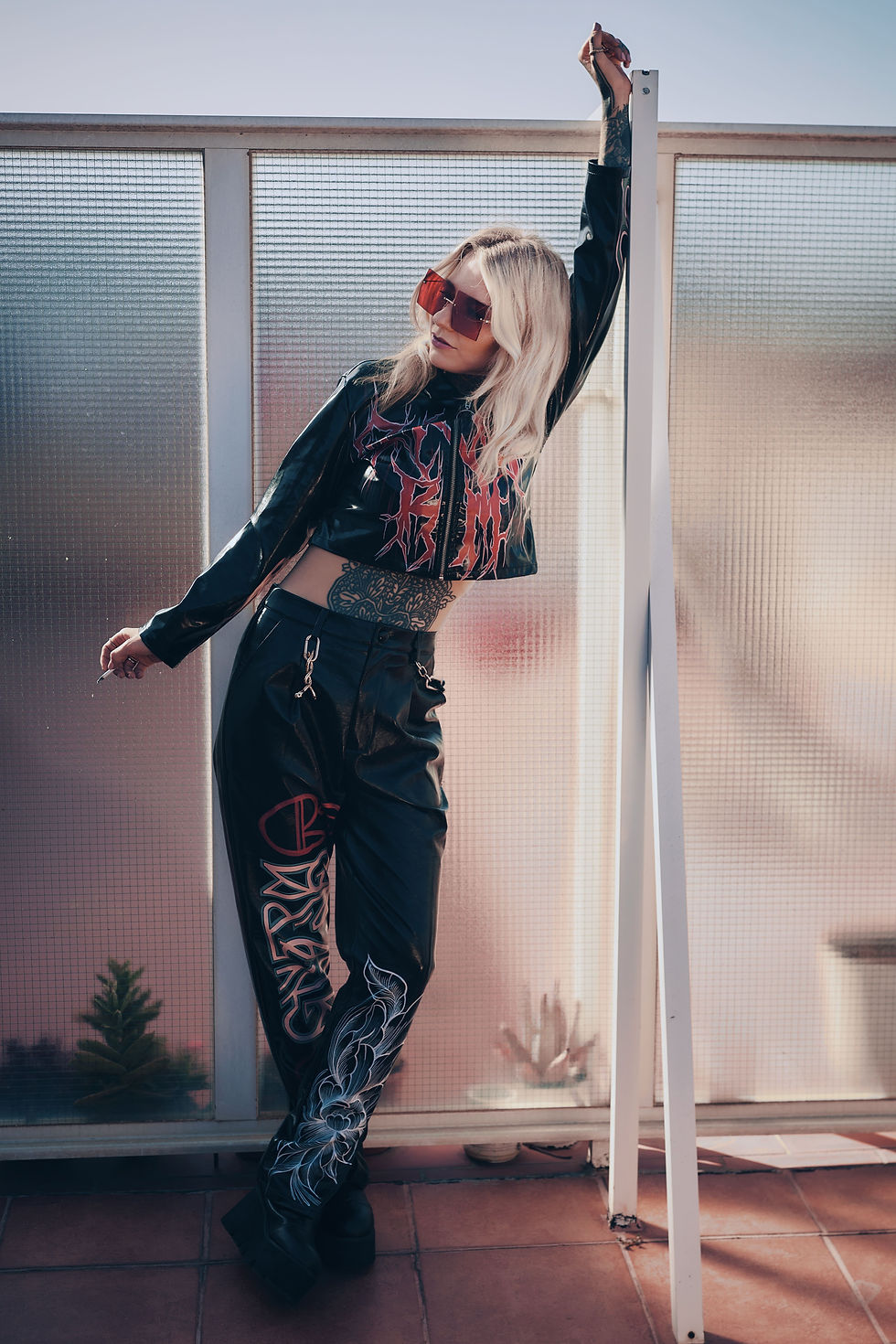


6. Do you practice other forms of art that the public might not know about, which serve as fuel for your tattoo designs?
This summer, I completely reinvented myself. I really listened to myself and tried to figure out what genuinely brings me joy and balance. I love painting — on canvas, in big formats, but still full of details. Tattooing can very quickly become a hamster wheel of self-doubt, obligation, repetition, and craftsmanship that’s incredibly hard to escape — and honestly, sometimes you don’t even want to. That’s why I’m currently learning completely new approaches that I absolutely love, and I’ve started creating large retro-futuristic acrylic paintings. In the past, I also built sculptures and made a lot of music.
7. Who were those artists that blew your mind in the beginning and somehow set the standard for what you wanted to achieve?
Like I mentioned before, traditional tattooing shaped me a lot. I’ve always been inspired by artists like Toni Donaire and Samuele Briganti. Technical gods like Nikko Hurtado, Nissaco, and Gerhard Wiesbeck have always blown my mind too. Outside of tattooing, one artist has been giving me those feelings for almost two decades now: Hiroshi Nagai. The amount of happiness his simple yet incredibly complex images give me is unreal.

8. As we move through this year, everyone wants to know: will you be attending any conventions or doing international guest spots where we can see you soon?
This year, I’ll only be at the Ancona Tattoo Expo in Italy. Next year will be more active again with my yearly visits to Gods of Ink, the Barcelona Tattoo Expo, and guest spots in Vienna and Tenerife. I love places and things I already know and love — never change a running system, haha.
9. If someone wishes to get in touch with you, what is the best way for them to do so?
People can always send an inquiry to termin@jessicasvartvit.com. My husband and I are a really great team, and we take a lot of time and care with every request and every person who reaches out.
10. Is there anything else you would like to say—a message you’d like to leave or anyone you would like to thank?
“Balance in creativity doesn’t mean harmony without contrast — it’s the art of letting contradictions exist side by side.” And thank you to all my clients over the past 12 years. Without you, there would be no growth and no lasting love for this beautiful madness.


Comments