


changsu yoo “sootattoo” Sydney - Australia @sootattoo_1 sootattoo1@gmail.com
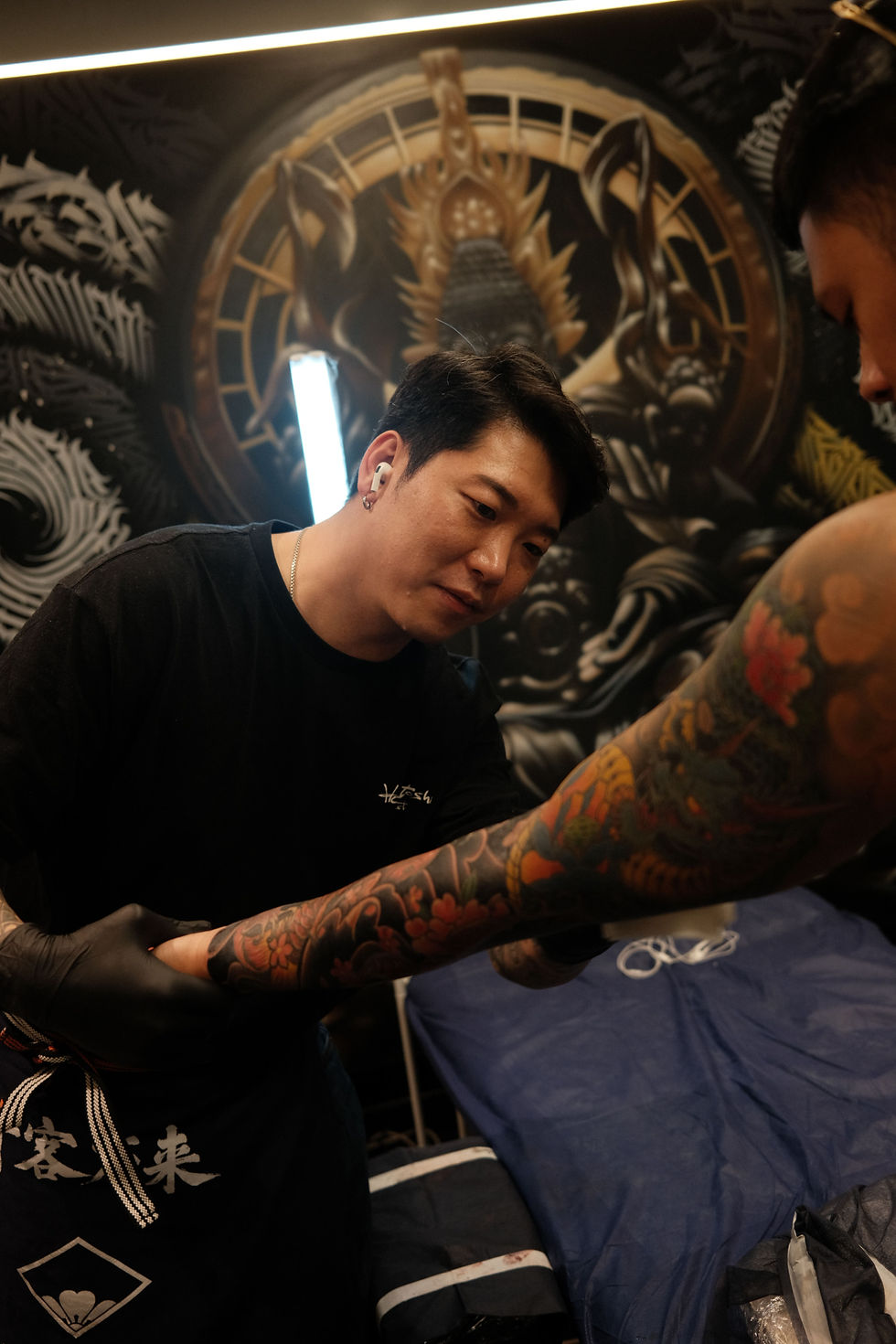
After more than a decade in the craft, Changsu Yoo maintains a workflow that stays far away from the rush of modern trends. Trained in the culture of traditional Japanese tattooing, his approach in Seoul is built on constant study and meticulous technical preparation before ever touching the skin.
For Changsu, Irezumi is a long-term process. His large-scale pieces are the result of days spent sketching and a deep analysis of how each design adapts to the body. In an industry that often moves toward immediacy, he chooses to focus on technique, freehand work, and the bond of trust built during long sessions.
We spoke with him about his training, the weight of consistency, and his plans to take his work to conventions outside of Korea.

1. Going back 14 years, what inspired you to pick up a tattoo machine for the first time in Korea, and what memories do you have of that very first piece you ever tattooed?
Looking back 14 years, I was drawn to tattooing in Korea because it felt like more than just drawing—it was a form of art that stays on the body forever. At the time, tattoo culture was much more underground than it is today, which made the craft feel even more intense and meaningful.
My very first tattoo wasn’t perfect, but I still clearly remember the nervousness and excitement I felt. That moment became the starting point for my entire career.

2. Who were your greatest influences or mentors during those early years, and what fundamental lesson do you still carry with you today?
In my early years, I was deeply influenced by artists dedicated to traditional Japanese tattooing and its rich culture. I started my training under the Japanese-Korean artist Sakaguchi Yoshihiro and later continued to evolve my craft under the influence of Macho Tattoo.
However, rather than relying on a single mentor, I believe I have grown through constant observation, study, and repetition. The most important values I carry with me to this day are consistency and a professional mindset. This craft requires patience, respect for tradition, and a lifelong commitment to growth.

3. Was there a specific moment in your career when you felt you had truly mastered the language of Irezumi, or do you feel it is a journey that never truly ends?
I don’t believe there is ever a point where you fully "master" Irezumi. It is an endless journey. Even now, I am constantly learning, and with every piece, I feel my understanding continues to deepen. That constant evolution is precisely what makes this work so meaningful to me.

4. What is a typical day like in your Seoul studio? How do you prepare yourself mentally and physically for the long-duration sessions your style demands?
A typical day in my studio is highly focused and structured. Because my work involves long, demanding sessions, both physical endurance and mental preparation are essential. Before each appointment, I carefully review the design, often spending at least five days refining and redrawing it. I also practice the layout thoroughly to ensure that any freehand work is executed smoothly.
I focus deeply on how to adapt the composition to the body’s natural flow. Once the session begins, I strive to maintain absolute concentration from start to finish.
5. How much importance do you place on the relationship and trust with your clients, knowing you will share so many hours of work over months or even years?
I place immense importance on the relationship with my clients. Since large-scale projects can span months or even years, trust is foundational to the entire process. I don’t view it simply as performing a tattoo; it is about the time and experiences we share together. I truly believe that a strong, mutual connection always leads to a better final result.
6. You have won several awards throughout your career. What place do these trophies hold in your professional life? Do they serve as motivation, or do you see them simply as a result of your daily hard work?
I am deeply grateful for the recognition I have received, though I don’t view awards as the ultimate goal. To me, they are simply a natural byproduct of a dedicated process. My true motivation stems from the daily grind and the constant pursuit of self-improvement.
I want to continue challenging myself—not for trophies, but to demonstrate that tattooing is a profound form of art rather than something negative. Ultimately, I want my clients to feel pride in the work they carry on their bodies. My hope is to be recognized by the global community of tattoo lovers for the soul I put into my craft.

7. You have a busy schedule of travel and conventions this year. What excites you most about taking your art outside of Korea, and what do you hope to find in this cultural exchange with other artists and collectors?
Traveling and participating in international conventions always broadens my creative perspective. Meeting diverse artists and sharing our work across different cultures is an incredibly enriching experience. Through these exchanges, I hope to continue evolving—not only as an artist but also as a person, by absorbing the unique energy and stories I encounter abroad.

8.Outside of the studio and conventions, who is Changsu Yoo? Do you have other artistic passions or interests?
Outside of the studio, my artistic eye never truly rests. I find a great deal of peace and inspiration in traditional imagery and the quiet patterns of nature. However, I also deeply value my solitude; spending time alone is essential for me to recharge and find the mental clarity I need to bring my best self to each new project.
9.To close: With such a solid career and so many years of experience, what are your plans or projects for the future?
Moving forward, I want to continue creating larger-scale works with a higher level of completion and detail.
I also hope to expand my international presence and share my work with more people around the world.
10.To whom would you like to give thanks, or is there a message you would like to share?
I would like to thank all of my clients who have trusted me with their bodies.
I’m also grateful to everyone who has supported me along the way—without them, I wouldn’t be where I am today.
To fellow artists walking a similar path, I hope you continue moving forward with dedication.


Comments